
In the Footsteps of Billy the Kid: Lincoln, NM
July 7, 2011 No Comments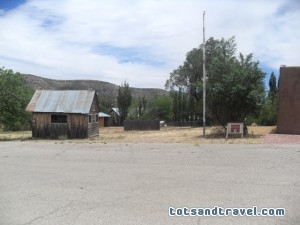
This sleepy village was the epicenter of the Lincoln County War
Dad and I are on an extended RV tour of the Southwest this summer, after wintering in Central Florida. Planning a cross-country trip can be tough, especially when many of the best places to see have little or no online presence. So we created a loose schedule based on the big, obvious destinations.
Our plan was to drive from Roswell, NM to Tombstone, AZ, stopping overnight at the halfway point in Deming, NM. Fortunately we ran into a wonderfully knowledgeable and very talkative employee at the visitor information center in Roswell, or we would have missed a significant chunk of history: Lincoln, New Mexico, where Billy the Kid got his start as an outlaw.
The Lincoln County War
John Tunstall threatened L.G. Murphy's monopoly
Endlessly depicted in Hollywood films, the Lincoln County War was at its heart a trade war. Then the county seat, the town of Lincoln was at the epicenter of the fight. English businessman John Tunstall arrived in Lincoln in 1876 with partner and attorney Alexander McSween. Opening a cattle ranch and mercantile, Tunstall threatened the monopoly of L.G. Murphy, long in control of government beef contracts and local farmers.
With both local law enforcement and the notorious Santa Fe ring backing Murphy, Tunstall felt threatened. He hired a motley band of outsiders and troublemakers to work for him. Tunstall provided an income and an education to his Regulators, and they provided both labor and protection. One of the Regulators was a then-unknown teenager named William H. Bonney, aka Billy the Kid.
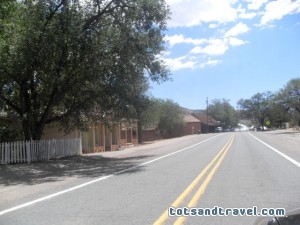
Hard to believe this was once the "Most Dangerous Street in America"
When Tunstall was murdered by Murphy’s boys in 1878, the Regulators were deputized and assigned to bring in the murderers, as well as a few others known to be affiliated with the gang. But the violence escalated, eventually causing President Rutherford B. Hayes to name Lincoln’s only street the “Most Dangerous Street in America.” In one of the war’s most noted firefights, Sheriff William Brady, a staunch Murphy supporter, was killed. Though he took bullets from at least five different guns, Billy the Kid was blamed.
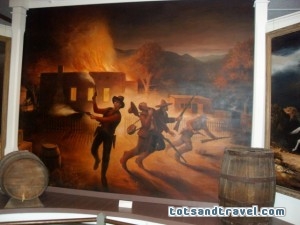
This painting depicts Billy the Kid leading the Regulators from the burning McSween home.
The Regulators lost their deputy status but refused to give up their quest for vengeance, turning outlaw instead. In 1879, they were tricked into returning to Lincoln, where they were trapped in the home of Tunstall’s attorney, Alexander McSween. Following a five-day siege, the house was set on fire by federal troops from nearby Fort Stanton, brought in to support the Murphy faction. Most of the Regulators escaped, along with McSween’s wife Susan. Alexander McSween, however, was shot in front of his home.
While most of his pals went straight or disappeared, Billy the Kid went on to become the West’s most infamous outlaw. Former pal Pat Garrett accepted an appointment as Sheriff of Lincoln County, and made hunting Billy his personal and professional goal. According to records, Pat Garrett shot and killed Billy the Kid in Fort Sumner, NM on July 14, 1881. An increasing body of evidence, though, raises serious doubts as to whether Billy was actually killed that night.
Visiting Lincoln
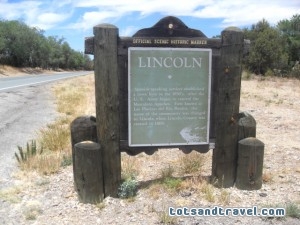
At the edge of town, this sign marks the beginning of Historic Lincoln
Our helpful visitor bureau employee suggested that we spend a few days checking out the Billy the Kid Scenic Byway, conveniently located between Roswell and Deming. The Byway covers 84 miles through the Hondo Valley, including a number of historic towns. But I was most excited to visit Lincoln. I wanted to walk the streets where it all happened so many years ago.
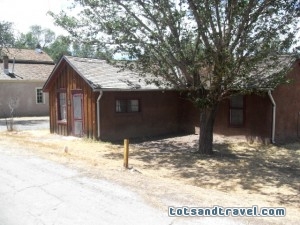
All of Lincoln's buildings must follow strict preservation codes
Lincoln today is a fantastically preserved small town. While many of the other historic towns through Arizona and New Mexico have become major tourist destinations complete with decidedly modern conveniences, Lincoln supports a population of 50-75 (depending on whom you ask) with no modern amenities at all beyond indoor plumbing and electric lights. There are no grocery stores, gas stations or fast food outlets. There is no “Greater Lincoln.” The entire town consists of carefully preserved historic buildings along a single street. Lincoln has been a National Landmark since 1960 and, according to locals, the city code is massive. Even the tiniest changes to any building must go through a series of permits and approvals to ensure that the 1870s character is preserved.
Today the Lincoln State Monument encompasses five buildings important in the Lincoln County War, as well as a detailed museum. As of 2011, all-inclusive admission is $5 for adults. Children aged 16 and under are free, as are New Mexico residents on select days.
Our Experience
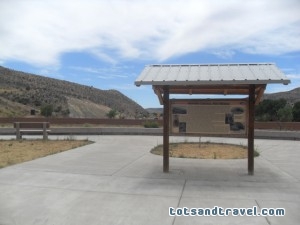
The Belgians we met at this roadside sign explained that Western films are popular in Europe
Interestingly, Lincoln’s only street is a portion of US 380, which runs from Greenville, Texas to San Antonio, New Mexico. Occasional travelers happen to discover Lincoln entirely by accident. But the area is mind-bogglingly remote. Traveling from Ruidoso Downs, where we began our Lincoln exploration at the Billy the Kid Visitor Center, we rarely encountered another vehicle. We did happen to stop at a roadside marker outside Lincoln at the same time as a couple from Belgium. Dad asked, “You know about Billy the Kid in Belgium?” and the husband replied, “Of course. We do have movies!”
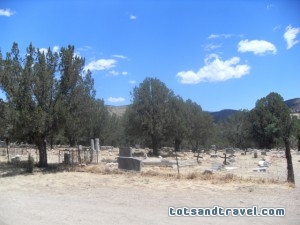
Victims from both sides of the war are buried here
Driving into Lincoln from that direction, be sure to stop at the cemetery. It’s off to your right less than a mile outside of town. It seems to be open at odd hours, but you can get great photos from outside the fence. Several victims from both sides of the Lincoln County War are buried there.
Lincoln is less than a mile long, and all buildings are located along the main road. It is best to park your car at the visitor center and museum, and explore the town by foot. Carry plenty of water and a few snacks. On the day of our visit, the temperature was 106 and the humidity was in the single digits. It’s easy to get dehydrated before you even realize you are thirsty.
Anderson-Freeman Museum
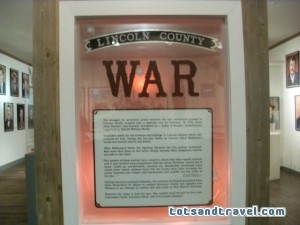
The museum presents a balanced account of the war
Attached to the Lincoln visitor center is the Anderson-Freeman Museum. This small but surprisingly detailed museum covers the history of Lincoln from prehistory through today. Take the time to read and digest the extensive exhibits on the Lincoln County War. Rather than taking sides, the museum presents the facts of the war with equal attention given to both factions. You can purchase tickets for the Monument sites here or at the Courthouse at the other end of town. Be sure to pick up both a free walking tour guide for Lincoln and a free driving tour guide of the surrounding area.
What to See
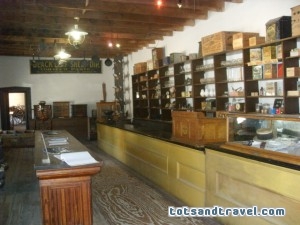
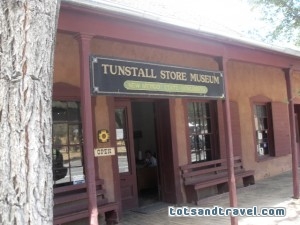
The Tunstall Store contains only authentic merchandise
Your walking tour map will detail 15 points of interest, including the five sites that are part of the Lincoln State Monument. We were able to complete the entire walk in approximately three hours, including stopping in at the shops along the way, talking with some of the locals, and reading each historical sign in detail. If you have a more passing interest, you can easily see all the sites in one to two hours.
In my opinion, the two stops that deserve the most time and attention are the Tunstall Store and the Lincoln County Courthouse. John Tunstall was Billy the Kid’s employer, and it was his murder that sparked the war. The store is fantastically preserved, stocked from top to bottom with the actual items that were sold there.
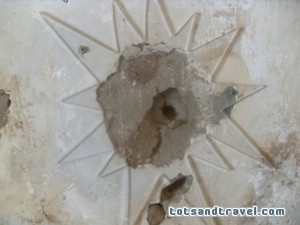
The hole Billy the Kid put in the courthouse wall during his dramatic escape
The Lincoln County Courthouse is no longer active, as the county seat moved to Carrizozo in 1913. But the old courthouse is arguably the single most important location in Billy the Kid history. It was originally L.G. Murphy’s mercantile, the center of the monopoly before Tunstall came to town. Murphy died in 1878.
After the Lincoln County War, James Dolan took over Tunstall’s store, and the old Murphy establishment was converted into the courthouse. It was here that Billy the Kid was held in 1881, awaiting hanging for the 1878 killing of Sheriff William Brady. Billy obtained a pistol, shot two guards, and fled the jail in a dramatic escape. Billy’s leg irons and the bullet hole he left in the wall are among the highlights.
Tips for Parents
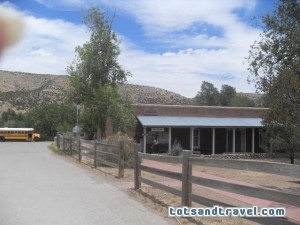
Lincoln is a well-preserved historic town
In our experience, kids are fascinated by the Old West. However, parents should note that Lincoln is a preserved historic town, not a modern museum filled with technological marvels. The town’s story is told through photographs, maps, artifacts and a great deal of printed signage. Bring Lincoln to life for your kids by reading and summarizing the presented information, and drawing their attention to interesting artifacts.
Consider watching the films Young Guns and Young Guns II before your visit. Although not entirely historically accurate, the movies do present a fairly complete overview of the Lincoln County War and the events that followed. Action-packed and easy to digest, the films can help get your entire family excited about this most unusual little town.

|
 About the Author:
Sorry, the comment form is closed at this time.