
Bulow Plantation Ruins: Discovering Florida’s Old Sugar Plantations
February 10, 2011 1 Comment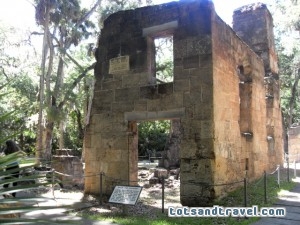
Bulow Plantation demonstrates Florida's history in sugar cane
In the 1800s, cotton was king throughout most of the American south. Florida certainly raised its share, but settlers quickly discovered that Florida’s rich subtropical climate made it an ideal location for raising another cash crop–sugar cane. In the early 1800s, sugar plantations dotted the Florida landscape, particularly along the Atlantic Coast. But the boom time was short-lived, as the Second Seminole War brought destruction to many of the state’s sugar plantations. Bulow Plantation Ruins Historic State Park is located in Flagler Beach, Florida, just south of St. Augustine.
History of the Park
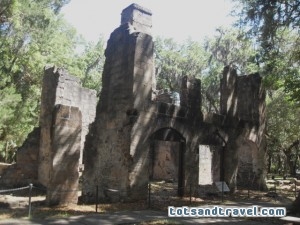
The plantation was extremely successful until the Second Seminole War
Bulow Plantation was built in 1821 by Major Charles Wilhelm Bulow. Although the plantation raised a variety of crops including cotton, sugar cane was its major focus. Although Major Bulow passed away two years after arrival, his son built the plantation into a successful business.
Unfortunately, it was burned by the Seminoles in 1836. Today the cleared acreage has largely been reclaimed by the forest, but the building shells remain. In 1954, the Florida State Parks system took over the site and turned it into a tourist stop. Bulow Plantation has been on the National Register of Historic Places since 1970.
Approaching the Park
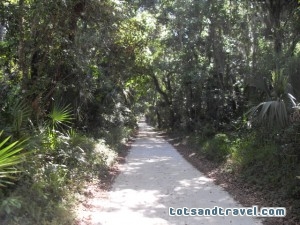
The original plantation entrance is still used today
The Old King’s Road connected St. Augustine with small towns along the Atlantic Coast. Old Beach Road served as the entrance to the Bulow Plantation from Old King’s Road. Just “one wagon wide,” the road is still the main entrance for visitors to the plantation site. Use extra caution and have your camera ready. Trees line both sides of the road, and it can be an adventure getting out of the way when another vehicle approaches. As of 2011, the admission fee is $2 per vehicle.
Mill
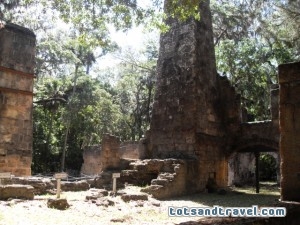
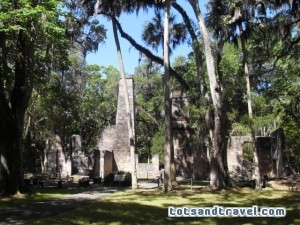
The ruined mill is the main attraction
The main attraction is the ruined sugar mill. A series of plaques lead visitors on a self-guided tour of the mill and its support buildings. Points of interest include the boiler room, machinery, water well, springhouse and cane juice processing facilities. Sidewalks are provided throughout, and the actual ruins are located behind small, low chains to minimize hazards.
Gardens
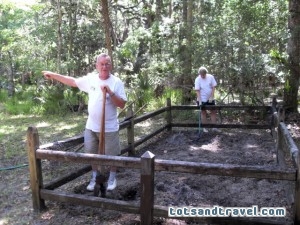
The gardens display crops grown on the plantation in the 1800s
Across the parking lot from the mill are the gardens. Volunteers work hard to plant and maintain some of the crops that were actually grown on the site such as cotton and sugar cane. The original gardens also provided food for the plantation home and the staff, so look for food crops as well. The volunteers happened to be out when we were there, and were happy to share their extensive knowledge of the site. Make sure to say hi if you see them out and about.
Slave Quarters
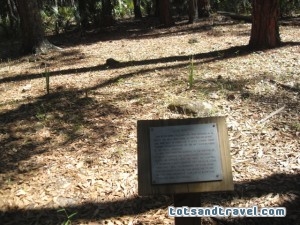
Only the foundations of the slave quarter buildings remain
The slave quarters site is a short, pleasant hike from the mill and gardens. Although nothing remains of the buildings but the foundations, a historical plaque marks their location. The stroll provides a great chance for the kids to burn off some energy. Keep an eye out for the massive tree that is actually two trees growing together.
Interpretive Center
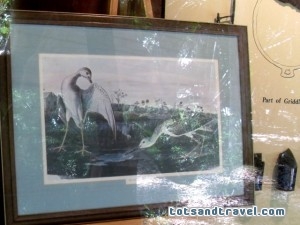
A painting by naturalist John James Audubon is among the highlights
The interpretive center is a small but well-done collection of historical artifacts found on the site. Photos, drawings and displays tell the story of plantation life, including a visit by noted ornithologist and painter John James Audubon. An original Audubon painting, created during his stay, is on display. Other parts of the exhibit focus on the Seminole Wars and the events that led up to the burning of the plantation.
Recreational Activities
The park is full of recreational opportunities
Although the focus is on the plantation ruins, the site also offers plenty of opportunities to enjoy natural Florida. A 6.8 mile hiking trail offers loops for shorter walks, and bicyclists are welcome. Canoes are available for rent at the park office. A picnic area is located along the banks of the Bulow Creek. Fishing is allowed from the dock.
Tips for Parents
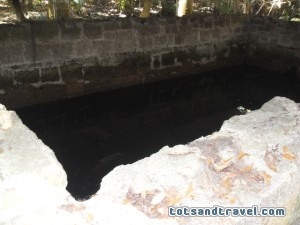
Keep an eye on your kids around the spring house
Although the ruins have been preserved, most of the park is maintained in a natural state. The old ruins can be dangerous, so make sure the kids stay on the designated walkways. Use particular caution at the old springhouse, which is still full of water.
Also keep an eye out for native wildlife. Deer and raccoons are the mostly commonly seen, but the park is home to a variety of animals including the diamondback rattlesnake. Spiders and other bugs are also a possibility. Stay on marked trails and do not allow your kids to run into thick brush or stick their hands in hollow logs. The odds of anything happening are rare, but common sense is the best defense.
Plan to spend several hours at the park. Bring a picnic, slow your pace, and take time out to run and play. Bulow Plantation signifies a simpler time and a more laid-back way of life.

|
 About the Author:
[...] Bulow Plantation Ruins: Discovering Florida's Old Sugar Plantations Feb 10, 2011 … Situated in Flagler Beach Florida, the Bulow Plantation Ruins Historic State Park is ripe with early … [...]