
Youth Hostels: A Budget Option, But Is It Right for Kids?
September 19, 2010 3 Comments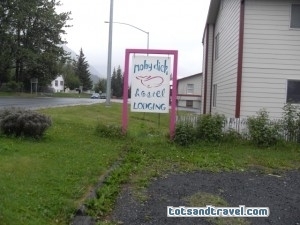
The Moby Dick Hostel is located in Seward, Alaska
Long popular in Europe, youth hostels have gained some traction in larger American cities. The concept is simple: rather than being isolated in an entirely separate hotel room, you can share space with other travelers from around the world. Despite the name, youth hostels are generally open to travelers of all ages. You can rent a bunk bed in a dorm or a private room that sleeps two to four. Hostels generally offer a communal kitchen and dining room, TV room, living room and porch or patio. Restroom facilities are also shared.
What Kind of Buildings Do Hostels Use?

The Alaska Backpackers is a typical Alaska hostel
Hostels may be located in virtually any type of building imaginable. Some are former motels. Many are Victorian-era homes. Some are modern high-rises, while others used to be lighthouses or summer camps. A few European hostels are in castles, while one in Morocco is a luxury Riad, or “palace with a garden.”

Many hostels have steep stairs
If anyone in your family is disabled, it is crucial to call or email the hostel in advance. Some are fully accessible, with elevators and ADA-approved restrooms. However, due to their historic nature, even in the United States many hostels involve a large number of stairs. With advance notice, hostel staff members are generally willing to help in any way possible, such as assigning you to a ground floor room and lower bunk.
Tell Me About the Dorms
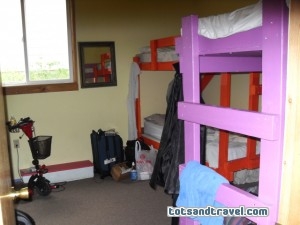
A typical hostel dorm room
Dorm rooms are at the heart of the hostel experience, but are not recommended for families with small children. In a dorm room, each traveler pays for a bunk bed. Prices are extremely low in comparison to hotels, averaging around $20 to $25 per person per night. Dorm sizes vary from four beds to eight beds in a typical hostel, but hostels in big cities may pack as many as 20 beds into a single dorm. Most hostels offer male-only, female-only and mixed-gender dorms. Restrooms may be connected to your dorm or located in the hallway. Most hostels require travelers to be at least 16 years old to stay in a single-gender dorm room, or 18 to stay in a mixed dorm.
What About Private Rooms?
Most hostels allow children of all ages to stay in a private room with a parent or guardian, although hostels do not offer cribs or other specialized baby equipment. Always call ahead to ensure that there is no age restriction.
Private rooms may offer twin beds, double beds, bunk beds or any combination, so be sure to request the configuration that you need. Private rooms are usually less expensive than all but the cheapest motel rooms, averaging less than $100 per room per night in even the biggest cities. Restrooms are generally shared between two or three private rooms.
Who Stays in Hostels?

Fellow travelers in Anchorage
The typical hostel guest is an independent traveler of any age, race or nationality. Hostel lovers tend to avoid package tours and large group travel, preferring to experience each location at their own pace. They tend to stay longer in each location than an average hotel guest, often for upwards of a month. Many hostel guests are traveling for a long period of time, moving from city to city by plane, bus or train and staying in hostels along the way.
You will most likely meet people from around the world including college students taking a gap year, newly retired couples eager to see the world, homeschooling families who travel extensively, and widowed seniors who prefer not to sit at home and knit.

We met in Atlanta and again in Nashville!
Almost without exception, hostellers are friendly, open, accepting and eager to learn more about the world around them. In the TV lounge or on the patio, over a game of pool or a shared meal, hostellers create bonds. It is not unusual to go sightseeing, cook dinner or take in a local music festival with people that you just met, nor is it unusual for casual acquaintanceships to turn into lifelong friendships.
Experienced hostelling families find that their children develop self-confidence, social skills and even an interest in world events through their connections with other hostellers. While it is important to keep a close eye on your children as you would in any large group, most parents find that their kids are accepted and appreciated by hostellers for their own unique personalities, thoughts and knowledge.
Who Runs Hostels?
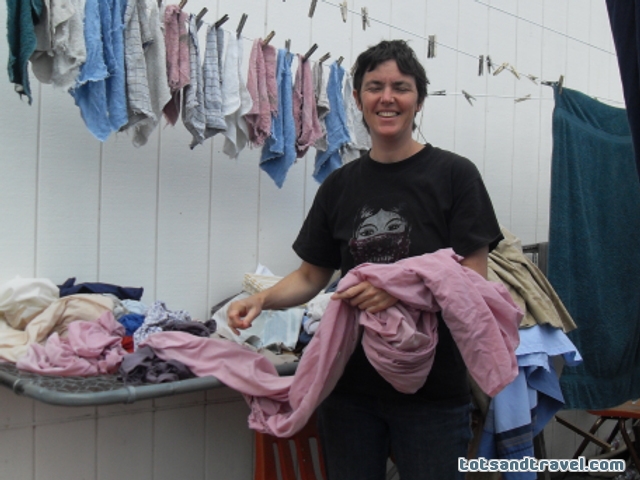
Some hostels are family owned
While some small hostel chains exist, such as the Jazz Hostels in New York City, virtually all youth hostels are independently owned and operated. Some owners are families that live on the grounds, while others hire managers to run the property. Most of the staff members that you will encounter are fellow travelers working part-time at the hostel to save money. Like the other guests, they tend to be friendly, accepting and open. They are usually great at solving problems and eager to do whatever they can to make your stay more pleasant.
Of course, just like any other type of establishment, not-so-good hostels do exist. Online hostel communities offer both professional and user-submitted reviews that can help you weed out the less desirable choices. In general, though, hostel competition is fairly stiff and word-of-mouth spreads rapidly. Bad hostels rarely stay in business for very long. Most hostels require little or no down payment to reserve your stay, making it easy to check out early if you don’t end up liking the hostel environment.
What About Amenities?
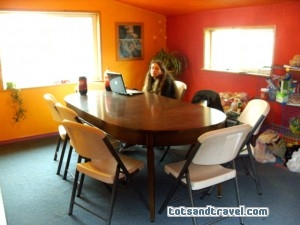
If you have to work while traveling, a hostel lets you spread out
Hostels are not hotels, and those who are interested in deluxe accommodations are likely to be disappointed. At a hostel, you must be self sufficient. Basics such as toilet paper are provided, but you must bring your own soap, shampoo and other toiletries. Sheets and blankets are provided, sometimes for a small fee, but you must make your own bed and turn in your sheets at the end of your stay. Some hostels offer a free continental breakfast or occasional cookout, but restaurants are generally not located on site. Both local and chain restaurants are usually found nearby. Basic standards of cleanliness are observed, but hostels tend to be slightly worn rather than sparkling clean and antiseptic.
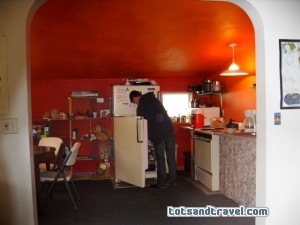
It's easy to cook in a well-stocked communal kitchen
In exchange, hostels offer a camaraderie and feeling of family that you cannot achieve at a hotel. Group activities, both planned and impromptu, occur daily. Large communal kitchens with multiple refrigerators make it easy to prepare meals. Kitchens are well stocked with both basic and specialized cooking equipment, and each guest is expected to wash the dishes he uses.
Is a Hostel Right for My Family?

International travelers at the India House in New Orleans were curious about Katrina damage
Some of my family’s most memorable travel moments have occurred in hostels. We gave tours of the Katrina-damaged sections of New Orleans to travelers from France and the Czech Republic. We sat and marveled at the midnight sun in Anchorage with travelers from all over the US and as far away as Turkey. We had a delirious late-night conversation with a group of middle school students from Germany at a hostel in Atlanta. We have developed some wonderful friendships with people that we regularly communicate with today.

With a friend from Turkey at the hostel in Anchorage, AK
But only you can decide what is best for your family. If your kids are shy or your family requires a great deal of personal space, you may be overwhelmed by the constant companionship at a hostel. Weigh your family’s personalities and vacation needs before making a decision. If you decide to give hostelling a try, consider starting with a weekend trip to a nearby city. This allows you to test the waters while providing an easy escape if hostelling is not right for you.

|
 About the Author:
[...] see hopping directly on a plane after the cruise. We decided to expand the trip by staying in youth hostels for an undetermined period of time following the cruise. We had airline credits from a cancelled [...]
[...] budget and personality, and I think the Millennium fit ours. We’re independent travelers, prefer youth hostels over hotels, and don’t mind crowds in the slightest. We’re very active, and would rather spend [...]
[...] [...]